Industrial Greases

Open-Pitch Chain Grease COMPLEX AG 1500

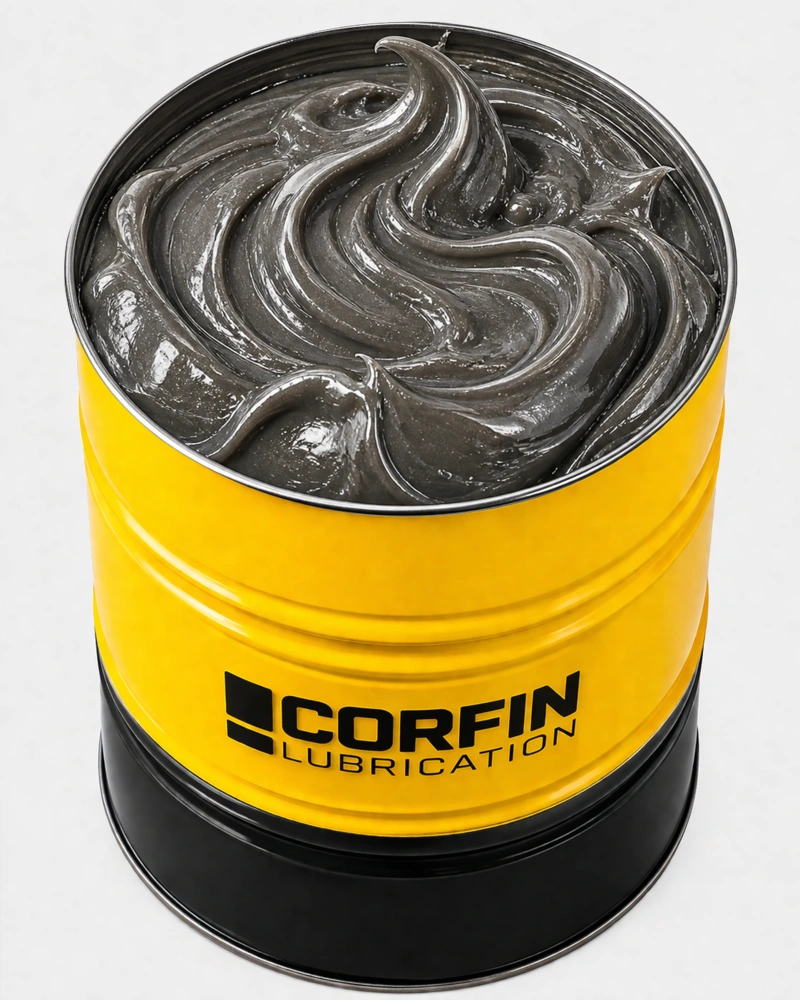
Product containing mineral base oil. It also has a sprayable adhesive structure. It contains tiny graphite particles thanks to its solid lubricant feature.

  • Calcium sulfonate complex material was used as thickening material.
  • It maintains its protection without dripping even at high temperatures.
  • It has successfully passed all rust tests.
Packaging 18 kg, 180 kg
Base Oils Mineral
NLGI Classifications 00
Product Categories Industrial Greases
Product Sectors Iron - Steel, Mining - Cement
Contact

Advantages of Open Gear and Chain Grease

Open gear grease Complex ag 1500 is resistant to high pressure and corrosion. It is free of solvents, bitumen, heavy metals and chlorine. It is a calcium sulfonate complex grease that is extra resistant to high pressure.

WHAT IS GEAR GREASE?
Greases consist of three main ingredients. These are base oil, thickener and additives. The calcium sulfonate complex is the thickener part of gear grease and can affect some of the lubricant’s functional properties such as dropping point, consistency and water washout resistance. However, referring to a grease by its thickener type does not provide sufficient information about its actual performance characteristics.

The term all-purpose grease is a fairly common term for commercially available greases. The term usually relates to the viscosity of some common additives and base oils. Most types of gear grease have extreme pressure (EP) additives and a base oil viscosity of 1500 cst.

Properties of Open Gear and Chain Grease

  • Gear grease has excellent adhesion properties. It also protects the structure of gears for load-shock resistance, helping to prolong the life of the equipment.
  • The carefully selected additives provide excellent levels of anti-oxidant and anti-corrosion properties.
  • Corfin brand Complex gear grease is a product with a homogeneous structure. Therefore, it is actively preferred in many areas.
  • It significantly reduces the coefficient of friction and energy consumption. It also plays an important role in preventing wear at the top and bottom of the tooth.
  • Operating temperature range -15 / 150 °C

Applications of Open Gear and Chain Grease

It exhibits superior performance in the lubrication of spur and bevel shaped gears operating under high load.

Complex gear grease is the perfect choice for sliding rails and guide rails.

It performs outstandingly in the lubrication and protection of wire ropes and large chain systems.

It is a product specially produced for spray lubrication of overloaded and exposed pinion gears of rotary kilns and lime mixers.

Application Areas

Open-gear and chain grease is designed for the lubrication and protection of systems operating under high loads and harsh conditions.

Technical Specifications

The technical specifications of COMPLEX AG 1500 grease, based on laboratory test results, are listed below. All values were measured under standard test conditions.

Analysis Standard Unit Result
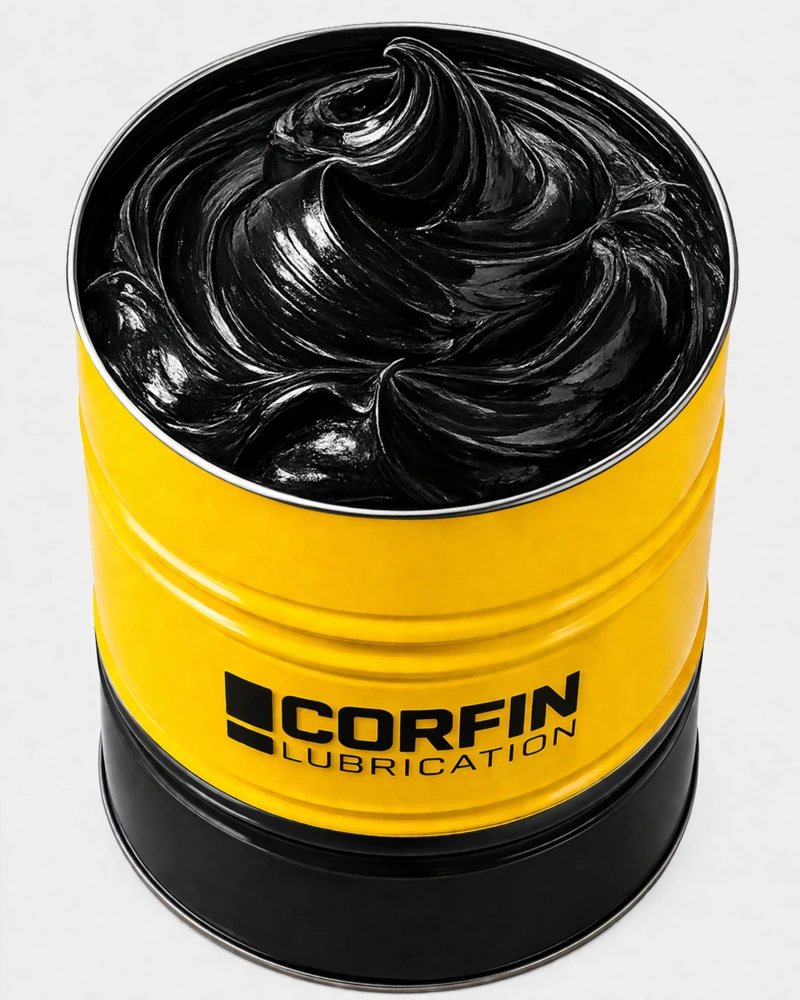
Color Black
Appearance Homogeneous
Thickener Calcium Sulfonate Complex
Base Oil Viscosity (cSt) at 40 °C ASTM D445 cSt 1500
Operating Temperature Range °C -15 / 150
NLGI Grade 00
Penetration ASTM D217 mm/10 400 – 430
Dropping Point ASTM D2265 °C >190
Four Ball EP Test (10 sec / 1770 rpm) ASTM D2596 kg ≥400
Rust Test ASTM D1743 Pass


Open Gear and Chain Grease: Frequently Asked Questions

When selecting gear grease, attention should be paid to the base oils used in the manufacture of the grease and its viscosity grade. Most gearboxes tend to be highly loaded and therefore require a lot of lubricant to protect the internal surfaces of the machine. In this case, the viscosity should not be low to ensure a good lubricating film. Another point to be aware of are extreme pressure additives. These additives can be chemically aggressive and can lead to chemical corrosion of machine surfaces. This is why Copmlex Ag 1500 is the most common in equipment parts. For this reason, polyurea greases are commonly used for bearing lubrication. The biggest factor when choosing a lubricating grease is to make sure that all other components of the grease are compatible with the requirements of the machine. Once these are balanced, you can be sure that you have chosen the most suitable lubricant for your application.

Large, slow-moving, open gears are often heavily loaded working equipments. During the working process, the gears are constantly subjected to impact, sliding and rolling forces. This is why the specially developed Complex Ag 1500 must have the best extreme pressure and wear prevention properties. In this way, the lubricant reduces both wear and friction on the gear teeth and ensures lower energy consumption.

The lubricant must be sticky to adhere to the gear teeth. It must not be wiped off by meshing teeth, washed off by rain or centrifuged away. It must also remain sufficiently flexible within the temperature range of the application. Complex Ag 1500 is therefore adhesive and cohesive. It is reinforced with special additives to ensure optimum coverage. It has a balance between adhesion to the tooth surface of the gears and cohesion, and the strips of lubricant fill the film continuously as interlocking tooth pieces.

In some cases this might be true. Certain types of EP additives are designed to react at elevated temperatures to protect metal surfaces under extreme lubrication conditions. Such additives are often called “chemically active” and at high temperatures (higher than 140 to 150 F), they can indeed begin to react with yellow metals. This is why it is so important to be careful when choosing gear oils for worm gears in order for the gears to function properly. A good way to check if an oil is “chemically active” is to look at the specification sheet provided by the oil manufacturer. On the sheet you will typically see a test called “copper strip corrosion” (ASTM D130). It tests how chemically reactive an oil is to copper or copper-containing alloys. For gear oils, a rating of 1a is typically a good indication that the oil is chemically inert; higher ratings (such as 1b or 2a) can indicate possible problems when used in certain gears at high operating temperatures. Often, a lubricant manufacturer will specifically state that “this oil should not be used in gearboxes containing yellow metals”; other times they will state that the oil is only suitable for application on steel, meaning that they should not be used where the ring gear is brass or bronze.


İlgili Ürünler

Download Technical Documents

Please fill in your details to access the TDS and SDS files.

    Thank you! You can download the files below.