Industrial Greases

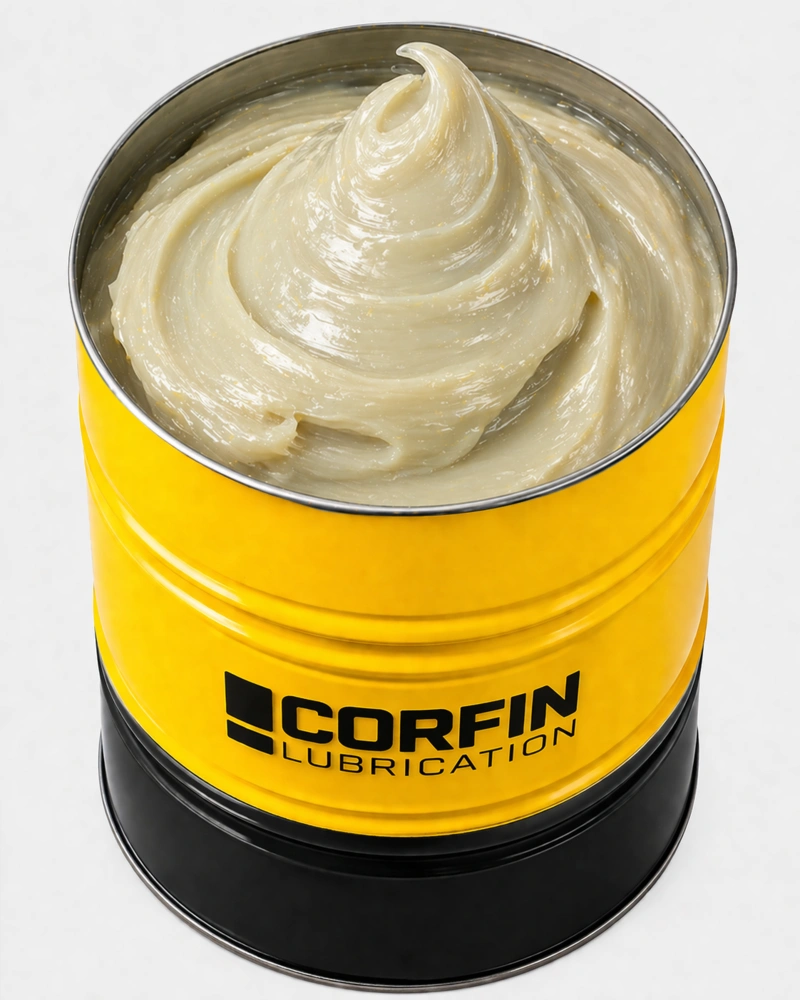
Synthetic Bearing Grease SILENT 72

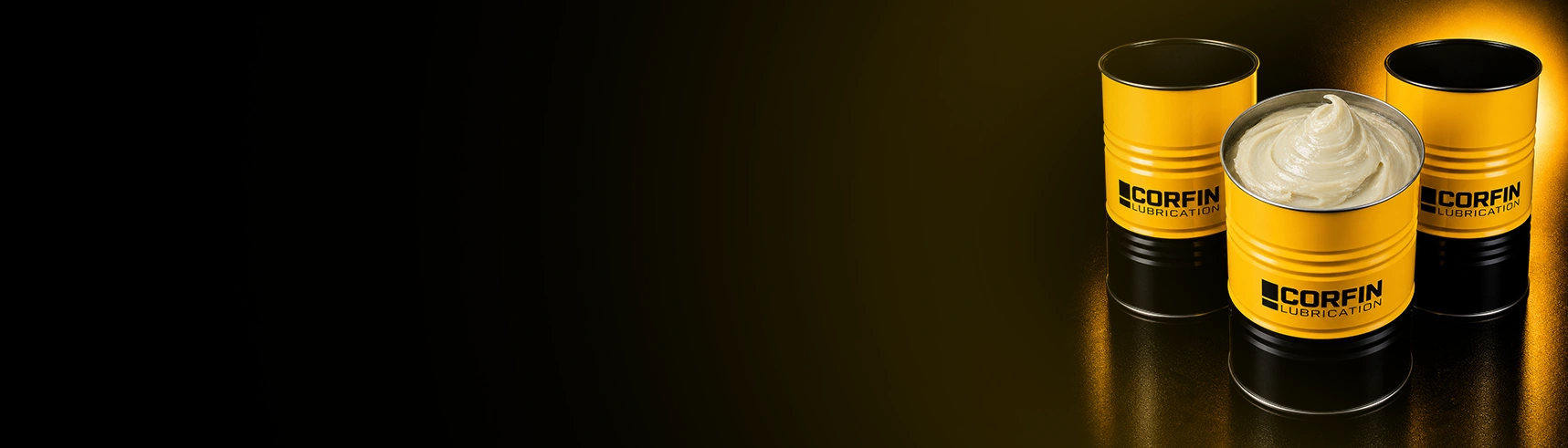
Sound reducing bearing grease is manufactured using high quality synthetic base oil. At the same time, it is produced using bearing grease, polyurea thickener and nano technology and has a sound cutting feature thanks to additives.

  • It can operate in wide temperatures ranging from -40 / 180 °C.
  • It reduces costs as it does not require long-term service and maintenance.
  • The use of Silent 72 bearing grease ensures that the equipment operates much more smoothly and quietly.
Product Categories Industrial Greases
Product Sectors Iron - Steel, Mining - Cement, Textiles
Contact

Advantages of Synthetic Bearing Grease

Silent 72 bearing grease, developed by the Corfin brand, is a lubricating grease with high purity. Even if it operates at high performance in extremely harsh environments, it continues to operate without losing its performance.

It is used in bearings operating under extreme stress in all sectors. At the same time, it is specially designed to have a long life and provide high performance lubrication.

Standard greases can give a softening effect as they are used. Silent 72 bearing grease is a one-of-a-kind grease with a very special structure that preserves its structure during operation without losing its chemical stability.

WHAT IS BEARING GREASE?
Considering all industrial applications, an average of 30% of the energy loaded into machines is lost through friction losses. It has been proven that this energy loss can be recovered by 25% with good design and good maintenance. This example also demonstrates that bearing grease lubrication is a very important industrial application rather than a routine maintenance operation.

In a process where the necessary analyzes and lubrication process are carried out perfectly, maintenance will be much easier and most of the possible malfunctions will be prevented before they occur. Bearing grease lubrication and maintenance is a process that must be carried out by expert personnel for each unit.

Properties of Synthetic Bearing Grease

  • It is used in many applications thanks to its wide operating ranges.
  • Its water resistance is excellent.
  • It is preferred in bearings that require quiet operation (white goods, electronic devices, etc.).
  • It minimizes the energy lost due to friction.
  • It maintains its structure during operation and does not lose its stability.

Applications of Synthetic Bearing Grease

Bearing grease, which is used in all areas of the industry, is used in all bearing equipment operating under extreme stress.

It is used in the lubrication points of all electrical appliances, as well as small household appliances and office equipment.

It is preferred in special bearing applications where high performance and long life are expected.

Mining: Bearing grease, which can resist many factors even under harsh working conditions, is used in mining equipment.

Application Areas

Bearing grease, which is used in every sector of industry, is applied to all bearing equipment operating under extreme stress.

Technical Specifications

The technical specifications of SILENT 72 grease, based on laboratory test results, are listed below. All values were measured under standard test conditions.

ANALİZLER  STANDART  BİRİM  SONUÇ
Color     Beige
Appearance     Homogeneous
Thickener     Polyurea
Base Oil     Synthetic
Base Oil Viscosity (cst) at 40 °C ASTM D445 cst 100
Temperature Range   °C -40 / 180
NLGI Class     1 / 2
Dropping Point ASTM D2265 °C > 250
Seperation from Oil (% weight) 7 days / 40 °C IP 121 %wt 0,75
Four Ball Test 1 hour/75 °C – 40kg (392 N) ASTM D2266 mm <0,35
Rust Test ASTM D1743   Pass


Frequently Asked Questions About Synthetic Bearing Grease

Although today’s cars are designed to offer smoother rides and quieter interiors, improved sound insulation cannot fully block out external sounds and rattles caused by road and engine noise. Unfortunately, most standard greases cannot adequately address these noise (vibration and harshness (NVH) and buzz, squeak and rattle (BSR)) problems. On top of that, regular greases can also react chemically with the materials they come into contact with, causing parts failure and discoloration. Just as automotive manufacturers are embracing design innovations to address NVH and BSR, such as optimizing tire tread to reduce road noise and using foam and insulation to reduce cabin rattles and noise, they are also turning to a class of high-performance lubricants that are more effective. You can eliminate these squeaks and rattles with Sound Reducing Bearing Grease SILENT 72.
 

In general, “noise” is an unwanted sound. Whether noise and vibration are linked to concerns about automotive occupant comfort or interaction with critical sensors and modules in autonomous vehicles, NVH (noise, vibration and harshness) isolation and mitigation are a primary concern for engineers. Noise usually occurs when two materials rub against each other. Friction and stick-slip can be reduced or prevented by using the appropriate lubricant. Sound-Reducing Bearing Grease SILENT 72 offers specialized lubrication technologies such as noise-dampening greases with low-temperature performance and very low oil leakage for friction control and dry-film anti-friction coatings for grip-slip prevention.
 

Noise-preventing greases are special lubricants, just like conventional greases, they reduce wear and insulate dust and moisture. But they are primarily used to control motion and noise in mechanical and electromechanical devices. Noise-preventing greases were first formulated to create economically fine tolerances in microscopes, telescopes, and binoculars. Despite being available for over 60 years, the reason why noise-canceling greases aren’t used much beyond optical instruments is because their low-temperature capacity is limited.
 

All greases are made by mixing an oil with a thickener, typically a synthetic material such as soap, clay, silica, or polytetrafluoroethylene (PTFE). Thickeners keep the oil in place. When grease is cut off, for example by a rotating shaft, sliding arm or rolling bearing, thickeners release the oil to lubricate moving parts. The difference between standard and anti-noise greases (damping) is slip resistance. In fact, the performance of damping grease depends more on its internal structure than on its ability to reduce friction between mating surfaces. The oils used for damping greases are generally viscous, high molecular weight synthetic varieties that provide much higher internal slip resistance than standard greases. Most standard greases have a slippery, even buttery consistency. Damping greases are sticky. It takes some force to move objects through damping grease. This internal shear resistance allows for “moist” dampening of greases or control of movement and noise. The higher the slip resistance, the greater the damping. Anti-noise grease prevents contact between mating surfaces, but requires the application of some force to move these surfaces in opposite directions. This is where the “magic” of damping grease lies. Parts move in grease and do not touch, so there is little noise or wear.


Related Products

Download Technical Documents

Please fill in your details to access the TDS and SDS files.

    Thank you! You can download the files below.