Industrial Greases

Food, Pharmaceutical, and Feed Industry Bearing Grease – NSF H2 Certified PLEXON GA 461

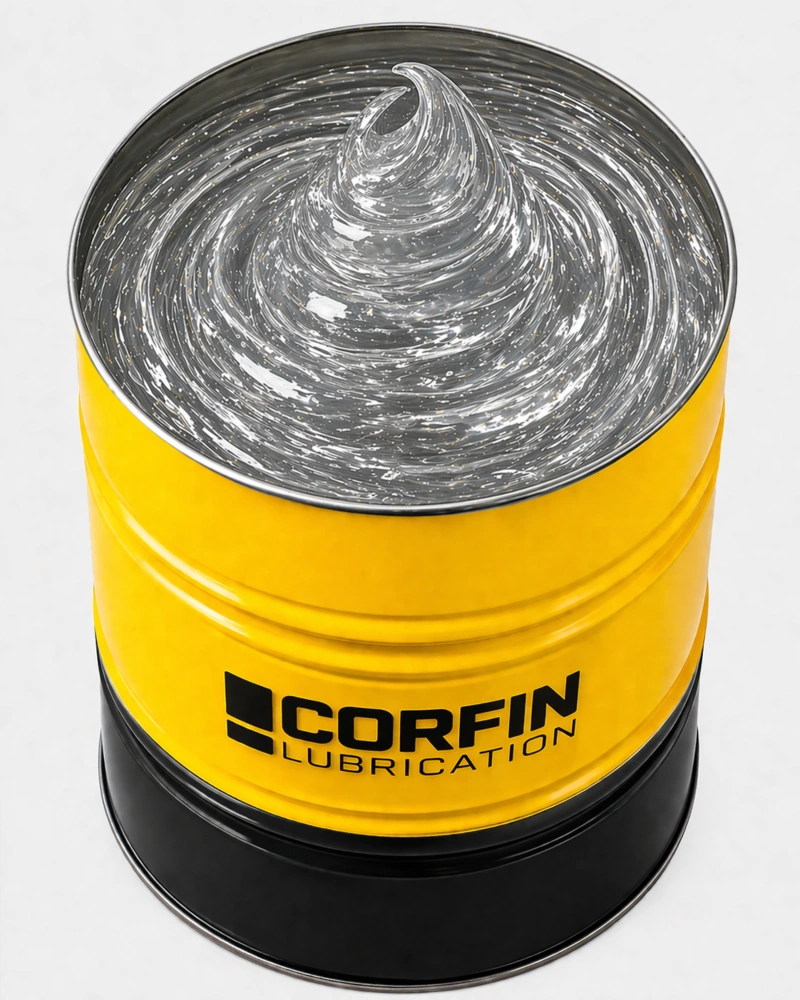
Food, Pharmaceutical, and Feed Industry Bearing Grease is manufactured using high-performance mineral oil and an aluminum complex soap thickener. It is specifically designed for bearings and lubrication points in the food and pharmaceutical industries. Produced using advanced technology, this product is designed to meet a wide range of applications and is transparent.

  • NSF REGISTRATION NUMBER 151602
  • It can operate in a wide temperature range of -20 / 125 °C.
  • The compressive strength is extremely high.
Packaging 18 kg, 180 kg
Base Oils Mineral, White Oil
Thickeners Aluminum Complex
NLGI Classifications 2
Product Categories Industrial Greases
Product Sectors Food - Pharmaceuticals - Animal Feed
Contact

Advantages of Bearing Grease for the Food, Pharmaceutical, and Feed Industries

It contributes greatly to production to support food safety especially at points where the risk of food contact is high. Performance grease with H1 approval is extra resistant to water and hot water.

The product, which contains special EP additives, is preferred as a general lubricating grease in many applications in the food and pharmaceutical industries. It is a product that can be easily used in all central lubrication systems (such as packaging and bottling processes).

WHAT IS H1 HIGH PERFORMANCE GREASE?
The NSF H1 approval allows the high performance grease to be used in the food and pharmaceutical industry as in it is not a threat to human health. They are applied as a release agent on seals of tank covers, as a protective anti-corrosion film on food processing equipment. It can also be used as a lubricant for machine parts and equipment where the lubricated part is potentially exposed to food.

The amount used should be the smallest amount necessary to achieve the desired technical effect on the equipment. If used as an anti-rust film, it should be removed from the equipment surface. The materials to be used in H1 performance grease are called HX-1.

Food grade greases are used in a variety of food processing equipment and other industrial equipment applications. These include plain and rolling bearings, linkages and slides, central lubrication systems and enclosed gearboxes.

Properties of Aluminum Complex Grease

  • The synthetic base oil it contains ensures its unique performance.
  • Its rust prevention feature is perfect.
  • Plexon H1 performance grease is a product with NSF H1 class approval certificate.
  • It is an excellent lubricating grease for the food and pharmaceutical industry.
  • Offers maximum efficiency in processing and industrial equipment applications.

Applications of Bearing Grease in the Food, Pharmaceutical, and Feed Industries

Food grade greases are used in a variety of food processing equipment and other industrial equipment applications.

It is used in process bearings and housings that operate in high temperature environments and require the use of food-grade grease.

It has wide working areas in fields such as automotive, mining, cement, paper, agricultural machinery and construction equipment.

It can be used safely in plain and rolling bearings, connections and slides, central lubrication systems and closed gearboxes.

Application Areas

Food, Pharmaceutical, and Feed Industry Bearing Grease is specifically designed for use in the food industry and in bearing and roller applications operating at high temperatures.

Technical Specifications

The technical specifications of PLEXON GA 461 grease, based on laboratory test results, are listed below. All values were measured under standard test conditions.

ANALİZLER  STANDART  BİRİM  SONUÇ
Color     White
Appearance     Homogeneous
Thickener     Aluminum Complex
Base Oil     SHC – Mineral
Base Oil Viscosity (cst) at 40 °C ASTM D445 cst 460 – 1000
Temperature Range   °C -40 / 180
NLGI Class     1 / 2
Penetration ASTM D217 mm/10 265 – 295
Dropping Point ASTM D2265 °C > 290
Seperation from Oil (% weight)30 hours / 100 °C ASTM D6184 %wt % 3,70
Seperation from Oil (% weight) 7 days / 40 °C IP 121 %wt 0,31
Water Spray (% weight) 38 °C, 5 min, Max. ASTM D4049 %wt %15
Rust Test ASTM D1743   Pass


Food, Pharmaceutical, and Feed Industry Bearing Grease Frequently Asked Questions

The addition of silicon carbide (SiC) and aluminum oxide (Al2O3) as reinforcement in aluminum metal matrix composites can provide several benefits, including Improved strength and stiffness: SiC and Al2O3 are very hard materials with high strength and stiffness. Adding these reinforcements to the aluminum matrix can significantly increase the overall strength and hardness of the grease, making it more suitable for use in structural applications. Improved wear resistance: They have excellent wear resistance, which can increase the durability and lifetime of the grease. This is particularly useful in applications where MMC will be subjected to high levels of wear and abrasive forces. Improved thermal stability: SiC and Al2O3 have high melting points and good thermal stability, which can help improve the overall thermal stability of the grease. This is particularly important in high temperature applications where the grease may be subject to thermal cycling or high temperatures. Improved corrosion resistance: SiC and Al2O3 have good corrosion resistance, which can help improve the grease’s overall corrosion resistance. It is particularly useful in applications where the aluminum complex grease will be exposed to corrosive environments. In general, the addition of SiC and Al2O3 as reinforcement to aluminum complex greases can significantly improve the mechanical, thermal and corrosion properties of the material, making it more suitable for a wide range of applications.
 

Extensive localized corrosion of Al Alloys, ranging from small pits to extensive corrosion over the entire surface, can occur in narrow crevices, which can be caused by geometry of the structure, e.g. riveted plates, threaded connections, etc. – contact of the metal with non-metallic solids, e.g. plastics, rubber, etc. – deposits of sand, dirt or permeable corrosion products on the metal surface. Differential ventilation plays an important role in the crevice corrosion mechanism, but it is not the only cause. In reality the situation is much more complex due to acid formation inside the crevice. In an aluminum crevice, corrosion shows little progress, possibly due to the precipitation of aluminum oxide, a corrosion product that restricts entry into the crevice.
 

Alumina used for column chromatography or thin layer chromatography are treated with acid or base to adjust the pH of the 10% slurry (weight/volume in water) to acidic, basic or neutral pH. These are denoted by A, B or N respectively. Acidic alumina has a pH of about pH 4.5, basic alumina has a pH of about pH 10. After preparation (precipitation), alumina contains an alkaline extract (up to pH 11) and neutral alumina is obtained from this material by washing with distilled water. When acidic alumina is required, the adsorbent is adjusted with an acid in suspension until the pH of the extract is 4-6.
 

If you are interested in characterizing the material and comparing different material types, the 0.2% offset method is probably the best method as it is used in industry and is repeatable. Preferably, you can also use standardized tensile specimen geometries to avoid geometric variation. However, if you are going to use this yield stress in a material model or plasticity code, for example in an FEM, you may want to backcast the yield stress based on the plastic deformation properties of the material. This will reduce the error of simulations or subsequent calculations. It is important to note that the “yield point” as we usually use it does not exist: This is a convenient way to quickly characterize and describe material properties. Depending on what you want to know about your material (or its application), a different definition of the yield point may be more appropriate.


Related Products

Download Technical Documents

Please fill in your details to access the TDS and SDS files.

    Thank you! You can download the files below.