Industrial Greases

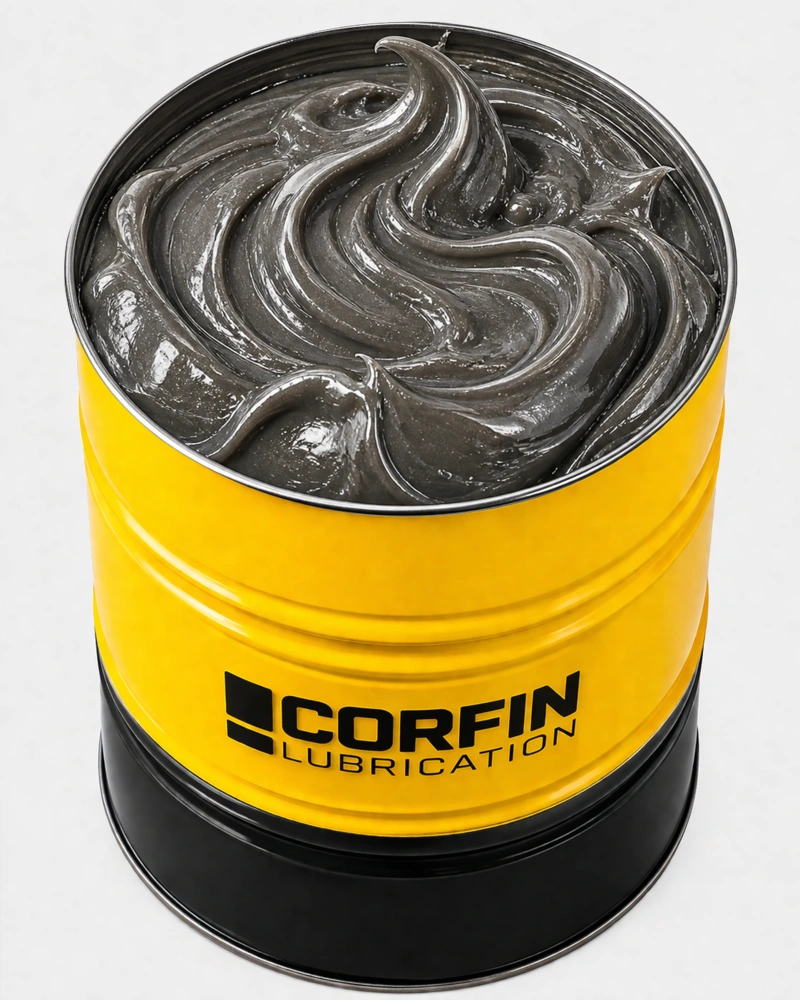
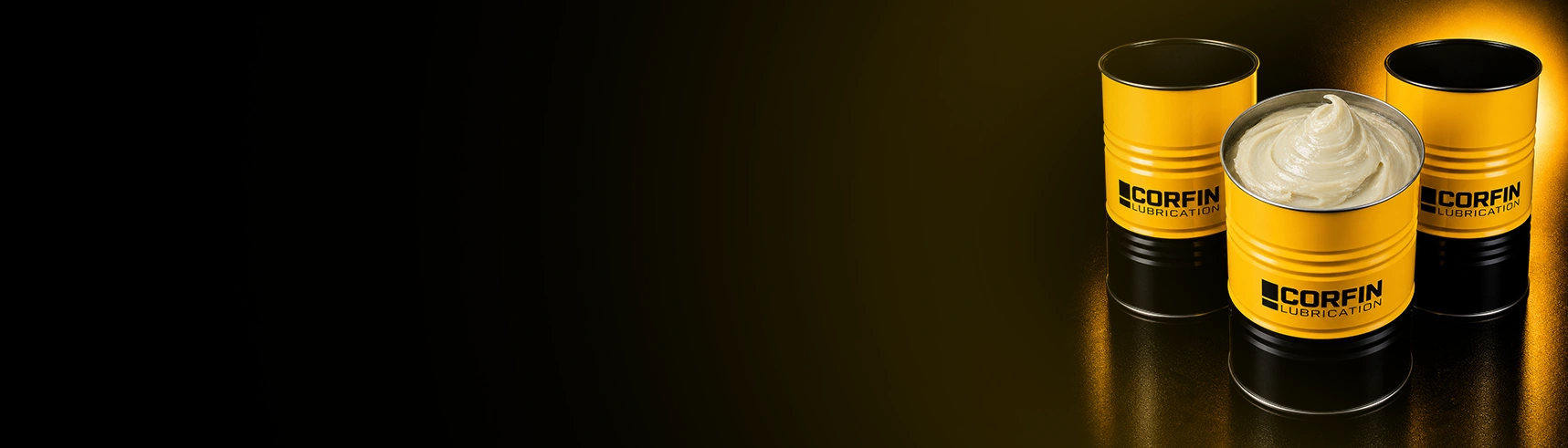
Synthetic High-Temperature Bearing Grease CORFIN PE 461

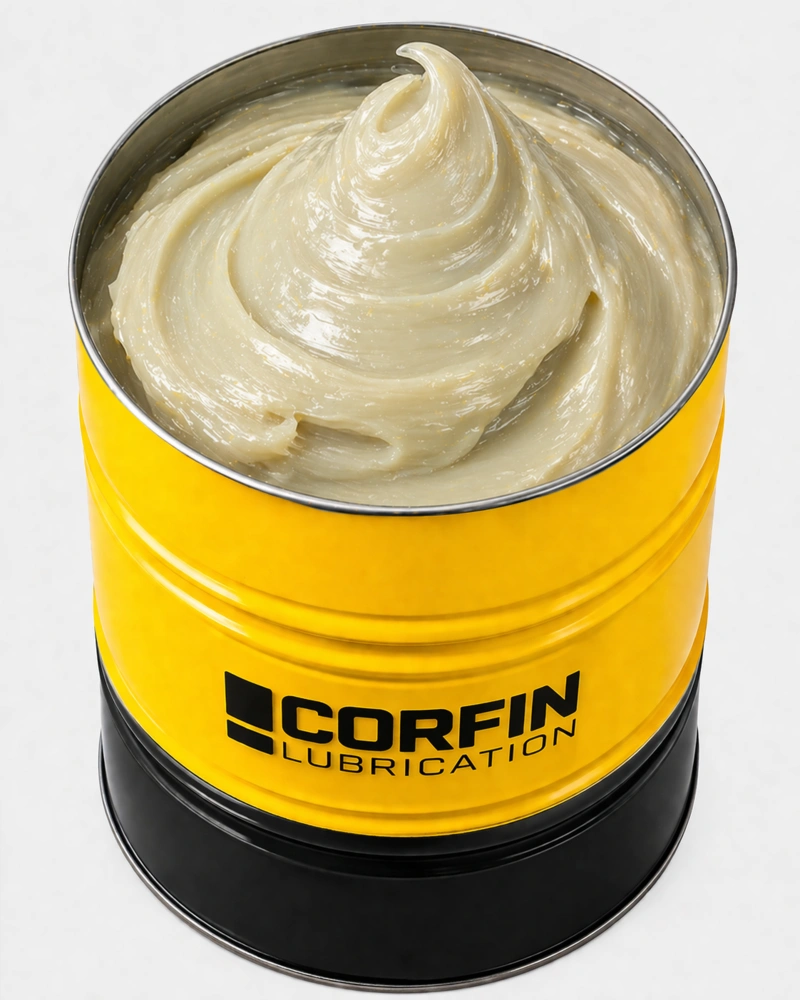
High temperature synthetic bearing grease formulated from high quality synthetic hydrocarbon base oil and polyurea thickeners. It is a grease with superior performance at extremely high temperatures and suitable for severe conditions.

  • Wide operating temperature ranges from -30 °C to 200 °C
  • Excellent wear protection thanks to its special additives.
  • High retention and long service life
Product Categories Industrial Greases
Product Sectors Iron - Steel, Mining - Cement
Contact

Synthetic Bearing Grease Advantages

All components used in the production of Corfin Pe 416 grease allow it to operate over a wide temperature range and provide continuous lubrication. The high viscosity of the base oil provides excellent protection even under extreme loads.

WHAT IS SYNTHETIC BEARING GREASE?
Synthetic bearing grease has traditionally been the most widely used lubricant for rotating machine components such as bearings. It is mainly composed of a lubricant and a thickener. The thickener acts as a carrier for the lubricating component, holding the lubricant between the lattice-like fibers.

During the operation of machines, temperatures gradually increase and as a result, oil leaks from the grease and lubricates the surfaces inside the bearings. Traditional petroleum-based and synthetic greases use thickeners made from metallic substances such as lithium or calcium. The main reason they are formulated with additives is to meet extreme pressures, extreme vibration or any other demanding requirements.

The difference between conventional synthetic grease and Corfin Pe 416 synthetic bearing grease can be found in the quality of the lubricants. Conventional greases use petroleum-based products such as mineral oil. Corfin brand grease is formulated using synthetic hydrocarbon base oil and polyurea thickeners. As a result, they can withstand extreme temperatures and maintain lubrication effectiveness better than conventional greases.

Synthetic Bearing Grease Features

  • Synthetic bearing grease keeps the material running even under high loads without allowing it to deteriorate.
  • Excellent corrosion protection
  • Synthetic bearing grease plays an important role in the support bearings of pinions.
  • It has a structure resistant to high temperatures.
  • It is resistant to extreme pressure and vibration.

Synthetic Bearing Grease Usage Areas

For extended lubrication of bearings exposed to high temperatures in iron and steel machinery

Bearings operating at very high temperatures and under extreme loads

In drive roller bearings that play an important role in continuous casting lines

Conveyor roller bearings in continuous casting furnaces, bearings of vertical mills

Technical Specifications

The technical specifications of CORFIN PE 461 grease, based on laboratory test results, are listed below. All values were measured under standard test conditions.

ANALİZLER  STANDART  BİRİM  SONUÇ
Color     Beige
Appearance     Homogeneous
Thickener     Polyurea
Base Oil     SHC
Base Oil Viscosity (cst) at 40 °C ASTM D445 460 460
Temperature Range   °C -30 / 200
NLGI Class     1 / 2
Dropping Point ASTM D2265 °C > 230
Seperation from Oil (% weight) 30 hours / 100 °C ASTM D6184 %wt % 6,00
Seperation from Oil (% weight) 7 days / 40 °C IP 121 %wt 1,50
Rust Test ASTM D1743   Pass

Synthetic Bearing Grease Frequently Asked Questions

Synthetic greases consist of a thickener dispersed in the lubricant, such as petroleum oil or a synthetic liquid. The thickener may be soap, an inorganic gel or an organic substance. Other additives inhibit corrosion and oxidation, prevent wear, and modify viscosity. For gaps between relatively large parts, the liquid component is the more important lubricant, but for small gaps, layers of molecular soap provide lubrication. Synthetic grease may consist of synthetic oils containing standard soaps, or it may be a blend of synthetic thickeners or bases in petroleum oils. Generally, both the base and the oil are synthetic greases. Synthetic greases are manufactured in water-soluble and water-resistant forms and can be used over a wide temperature range. Synthetic greases can be used in contact with natural or other rubbers as they will not soften these materials.
 

Traditionally, grease has been the most common lubricant for rotating machine components such as bearings. It consists mainly of a thickener and a lubricant. The thickener acts as a carrier for the lubricating component, holding the lubricant between its lattice-like fibers. As the temperature rises during operation, oil is released from the grease and lubricates the contact and sliding surfaces of the bearings. Conventional petroleum-based and synthetic greases use thickeners made from a metallic substance such as lithium or calcium. They can be specially formulated with additives to meet extreme vibration, extreme pressure or other demanding requirements. The difference between conventional and synthetic greases is in the lubricant. Conventional greases use a petroleum-based product such as mineral oil. Synthetic greases use a synthetic lubricant such as silicone. As a result, they have a high resistance to extreme temperatures and can maintain lubrication efficiency much better than conventional greases.
 

Recently, synthetic greases have found increased use in rotating equipment. Long considered the lubricant of choice for applications involving extreme heat, loads and speeds, synthetic greases are becoming a more viable option for bearings and other components that face moderate operating demands. There are two main reasons for the growing popularity of synthetics. The first is the availability of new products and formulations. Synthetic greases are now available in additional viscosities and consistencies, and there are even “green” or biodegradable varieties. The increased choice allows maintenance and lubrication professionals to evaluate synthetic greases for a wider range of applications. The second is affordability. The cost of synthetic greases has not risen as fast as that of conventional petroleum-based greases, narrowing the cost gap between the two grease categories. As a result, synthetics are now a more affordable option in some applications where their use was previously cost prohibitive.
 

While conventional, mineral oil-based greases can be formulated to provide effective performance for many applications, synthetics typically provide some significant advantages, including longer oil life. Synthetic fluids provide superior lubricity over a much wider range of application temperatures, all else being equal. This is as true for lubricating oils as it is for greases. In high temperature applications, synthetic oil thins less than comparable mineral oils and provides greater protection by forming a thicker oil film between surfaces. In addition, these oils are less prone to degradation at high temperatures. In this sense, synthetic-based greases can provide stronger protection than standard greases.
 

Application Areas

It is suitable for use in bearings operating under high temperatures and heavy loads, as well as in continuous casting and conveyor systems.

Related Products

Download Technical Documents

Please fill in your details to access the TDS and SDS files.

    Thank you! You can download the files below.